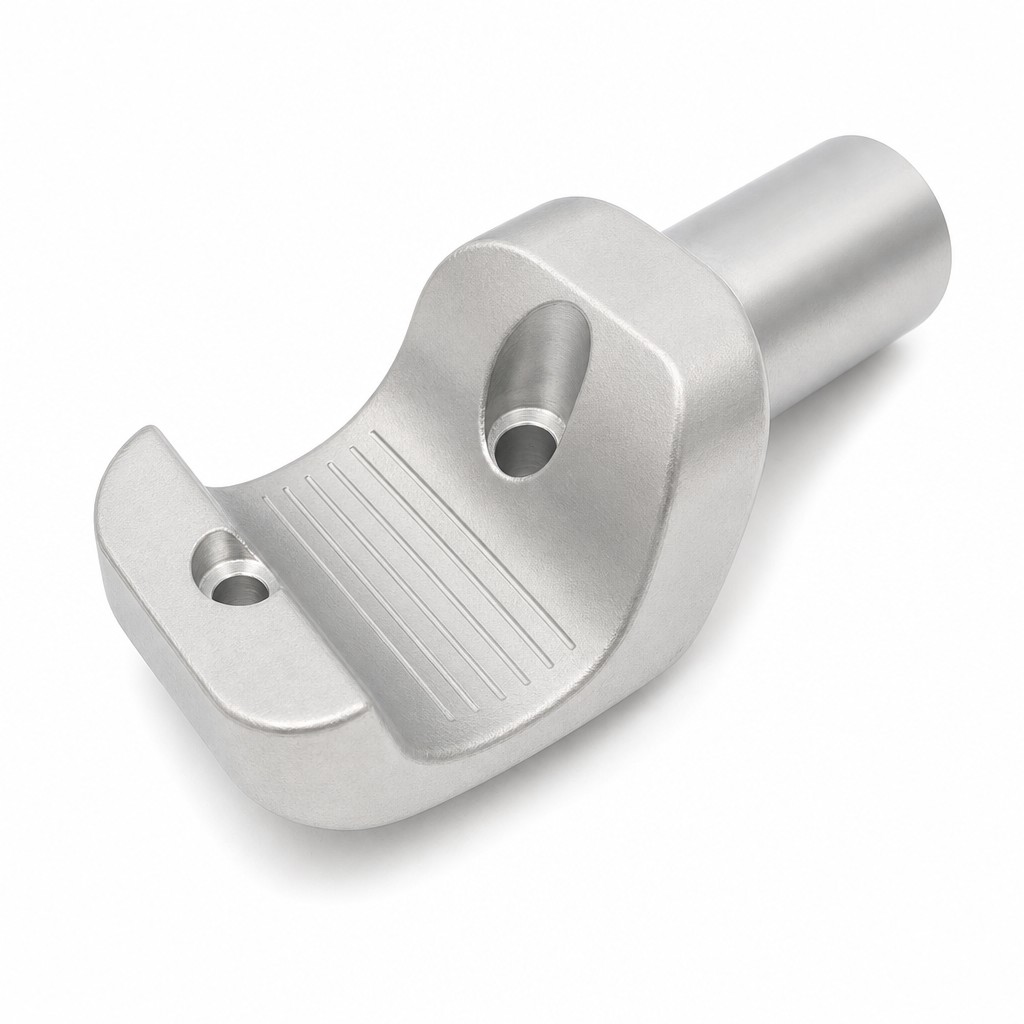
One end is a turned shank, the other a milled clevis; the two bores differ in size, one taking the pin and the other a cotter.
Shank and fork are machined in one setup so the fork bore coaxiality comes off the machine, and the pin drops in without reaming at assembly.